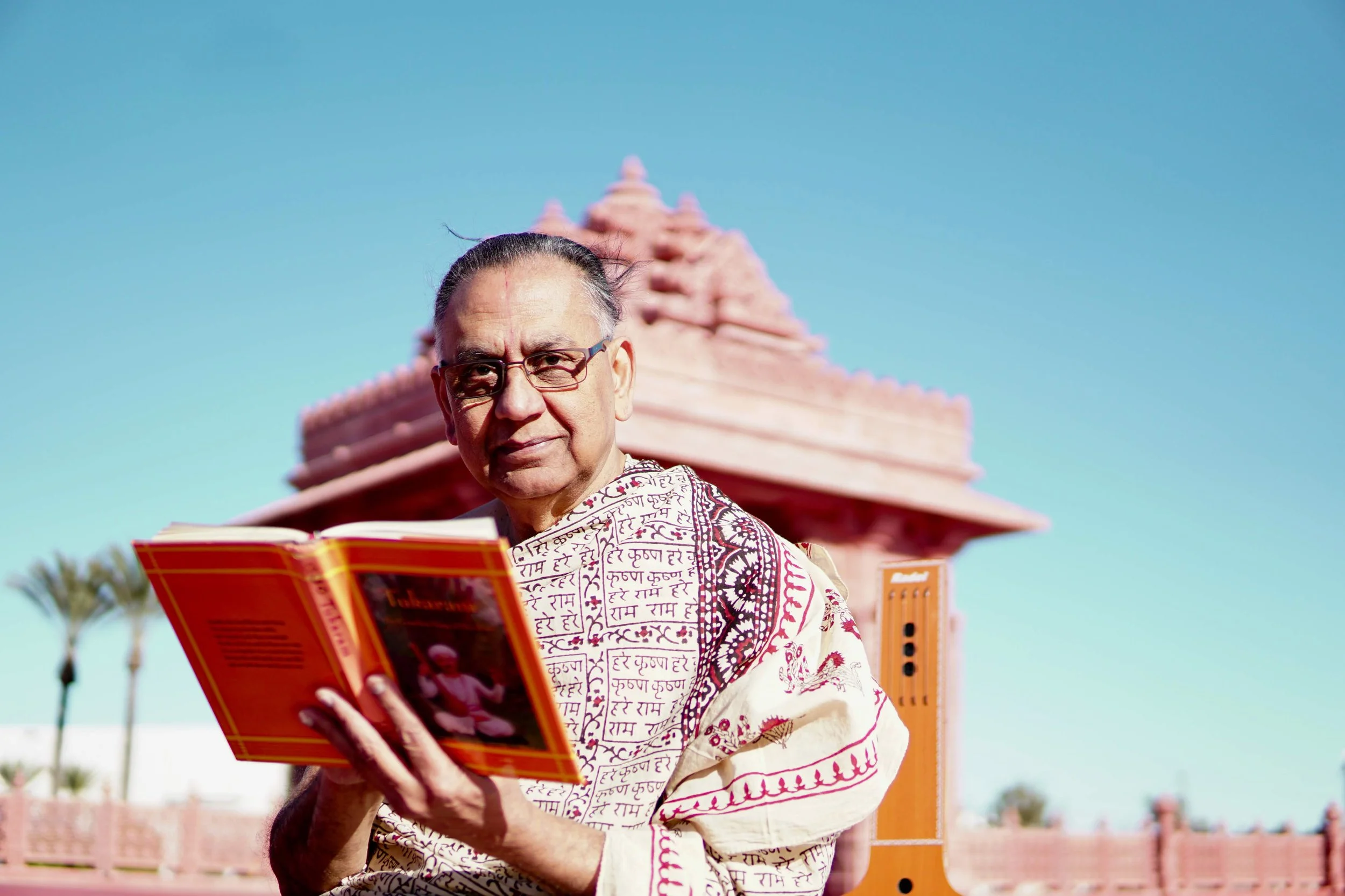
Vakgeyakara, Vedic scholar, poet, composer, and exponent of the ancient traditions of Nama Sankeertanam and Hari-Katha — performing and teaching Karnataka Sangeetam across four continents since 1955.
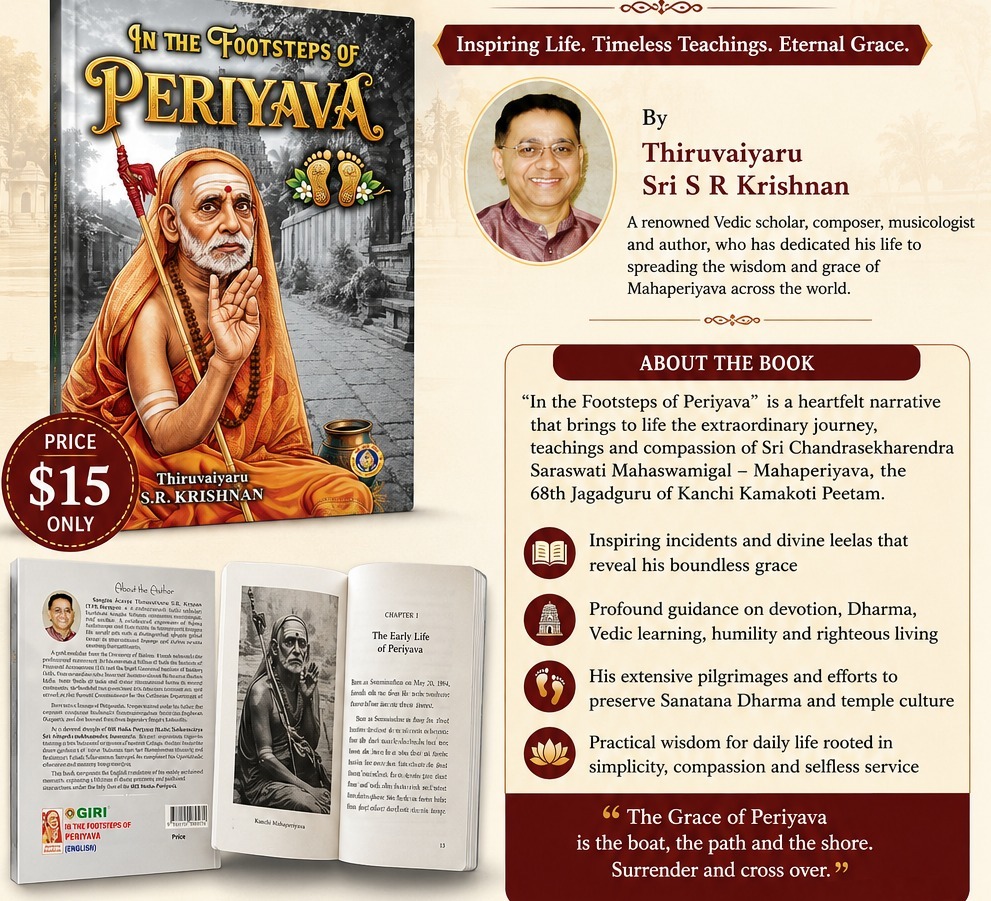
An English memoir on a decade of direct personal interactions with HH Maha-Periavā, Sri Chandrasekharendra Saraswati — published in 2026 by GIRI Publishers, India, and released by HH Vijayendra Saraswati Swamigal on 21st August 2026.
A companion to the Tamil memoir Periavā Kāladiyilirundu (2024), committed to paper with great truthfulness at the request of the families of his weekly Sat-Sangam.
A 40-track Hari-Katha
live performance through the Marathi Abhanga tradition —
weaving together the lives and compositions of Saints Namdev,
Gyaneshwar, Janabai, Eknath, Samartha Ramadas, and Tukaram.
Press play on any track to listen in your browser.
Introduction of Artists
Introduction of Mela
Founders of AbhangMela
Tradition
tAandava nrityakarI nAmdev
Abhanga Mela katha
teerth viththal khetra vitththal nAmdev
nAmdev on teerth vitthala
deha jAvo athavo rAho nAmdev
achyutA AnantA nAmdev
mAjhA bhAv tujhe charaNee nAmdev
katha GyAneshwar
RuNu JuNu RuNu JuNu re BramarA GyAneshwar
amrutAhuni goda nAm tujhe devA nAmdev
PandareenivAsA sakhyA pAndurangA namdev
nAmdev and JanAbAi
nAmdev keertan kareem prem bhaja nAmdev
JanAbAi katha
EknAth and other saints
mAjhe mAher Pandaree Ahe EknAth
Vitthala Vitthala
Samartha Ramadas
Arambhee vandeena ayodhyechA rAjA Samartha Ramadas
A reflection on the evolving Guru-Sishya tradition in Indian classical music — examining how the ancient gurukulam model of intimate, long-term discipleship is being transformed by modern technology, institutional education, and changing cultural values, and what this means for the future of Karnataka Sangitam.
By Thiruvaiyaru S R Krishnan·
GuruBhaktiGuru-SishyatraditionCarnatic musicIFAA
A reflection on the evolving Guru-Sishya tradition in Indian classical music. The article examines how the ancient gurukulam model — where disciples lived with and served their Guru for years, absorbing music through immersion rather than formal instruction — is being transformed by modern technology, institutional education, and changing cultural values. Drawing on personal experience spanning six decades as both disciple and Acharya, the author explores what is gained and what risks being lost as this millennia-old tradition adapts to the 21st century.