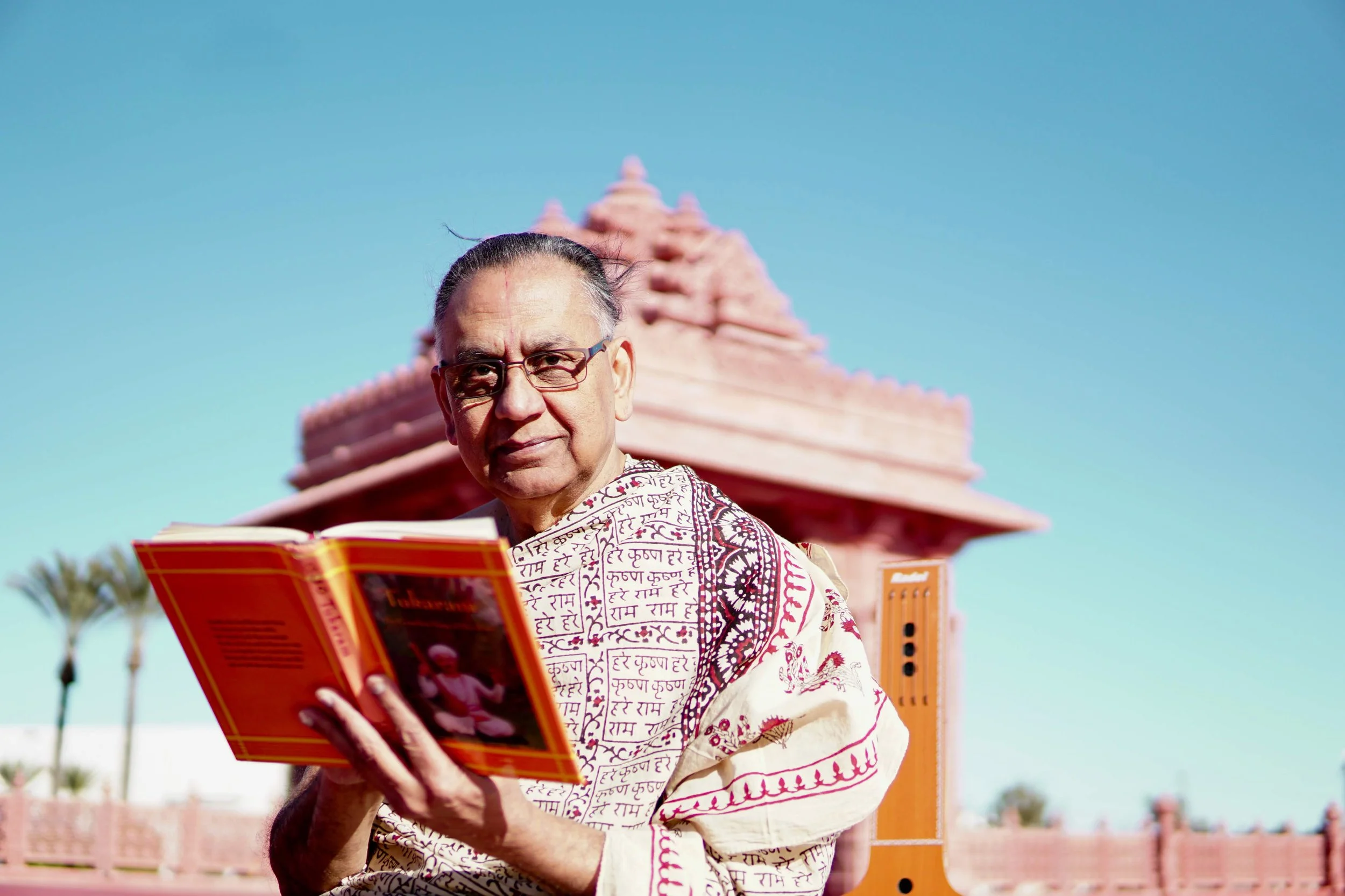
Sangeetha Acharya Thiruvaiyaru S R Krishnan
Srinivasa Raghava Krishnan, aka, Sangeetha Acharya Thiruvaiyaru S R Krishnan (“Krishnan”) was born in Thiruvaiyaru, in Tamil Nadu, India.
Krishnan is a Vedic scholar, Vãkgèyakãra, lyricist, composer, Poet, journalist, spiritual writer, operatic playwright, novelist and until recently an International Fiduciary for several decades.
Achãryãs
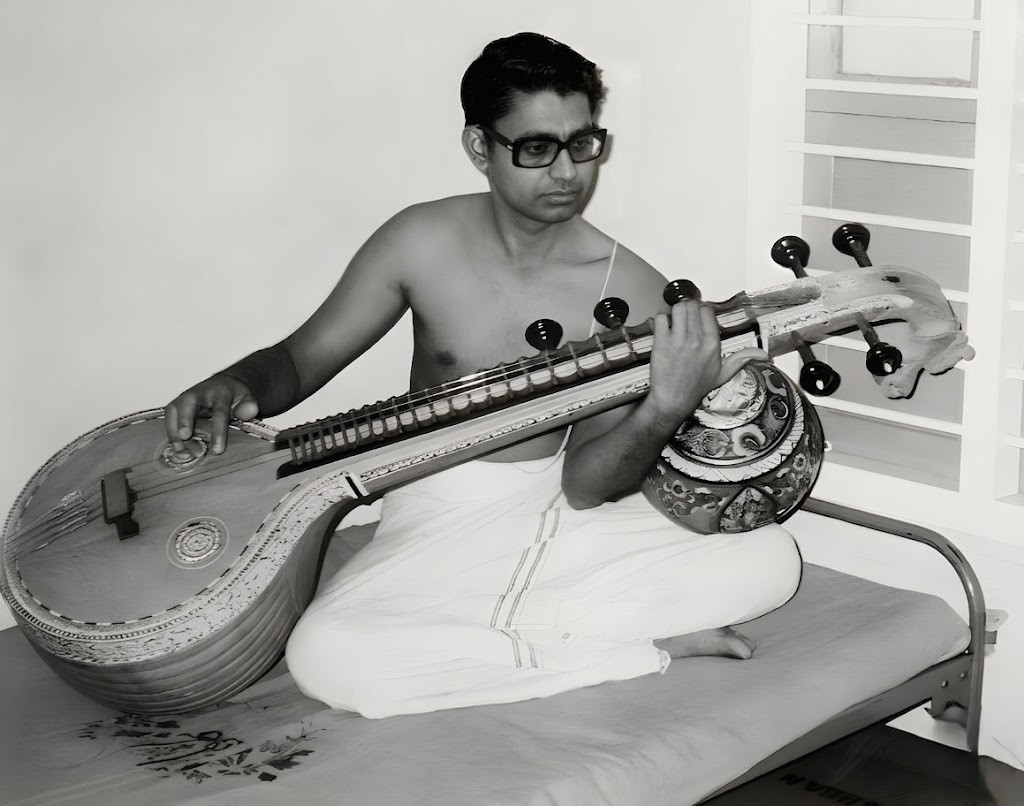
1972, SK with Veena
Krishnan started training in Karnataka Sangîtam very young, under the tutelage of his father Gãna-Bhûshaṇam Kumãramangalam Srinivasa-Raghavan (KSR), a 20th century Vãkgèyakãra (musician-composer with mudra or signature, ‘RagaSri’).
KSR served in the Royal (Indian) Air Force (1940–1945) and retired after the World War (II) ended.
RagaSri compositions (in several Indian languages) number more than three hundred and were blessed by HH Kanchi Paramacharya, Sri Chandrasekharendra Saraswati (aka Maha-Periavã) and applauded by contemporaries such as Tamiz Isaimani Adi-Seshayya, Tiruppugazh ‘Appa’ (retired Chief Justice TM Krishnaswamy Iyer), Maharãjapuram Viswanatha Iyer, G N Balasubramaniam, and Maragatam amma (aka Aandavan Pichai).
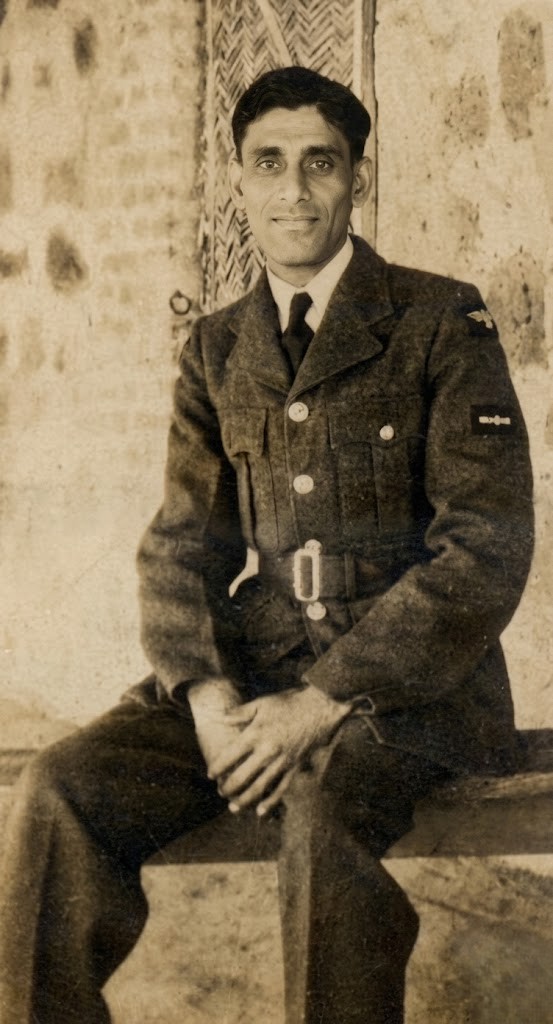
KSR, RAF Pilot Officer, 1941

Sq. Leader KSR, 1944
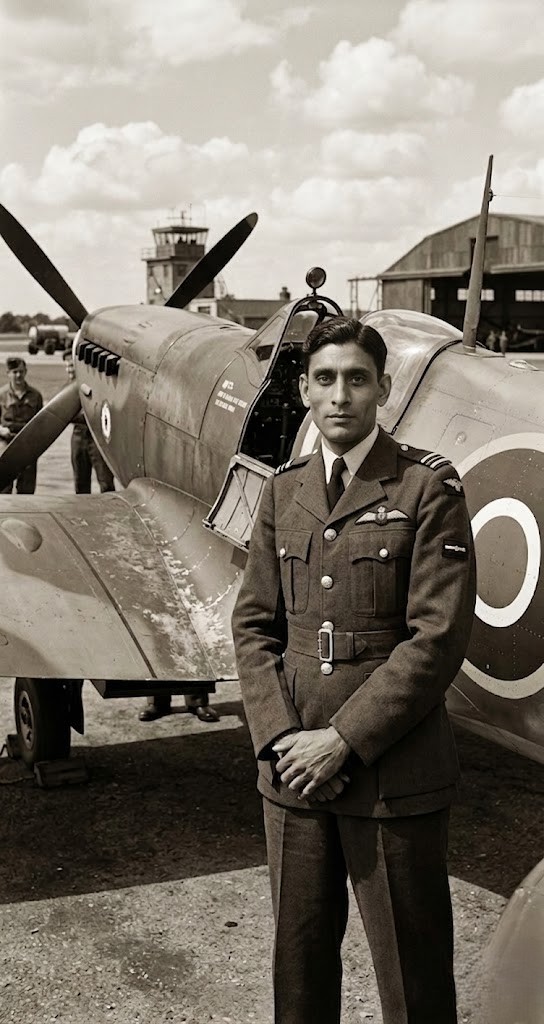
KSR, 1945, RAF
KSR (RagaSri) translated all the 100 dasakams of Sriman Narayaneeyam into Tamil verses (in identical metrical formats) — which will soon be curated for digital preservation for posterity. Many of RagaSri’s compositions on Lord Subrahmanya, Parãśakti, Lord Krishna (aka Guruvayurappan) were presented first by Krishnan and his sister Bhooma Narayanan (aka Bhooma Srinivasa Raghavan), as offerings at the feet of Kanchi Paramacharya Sri Chandrasekharendra Saraswati in the 1950s and 1960s. Krishnan also learned several rare compositions from legendary musicians, Sangeeta Kalãnidhîs Maharãjapuram Viswanatha Iyer, G.N. Balasubramaniam and Madurai Mani Iyer.
Krishnan debuted in 1955 as a musician and since then has given numerous concerts in prestigious venues in India, Great Britain, Europe, Far East Asia, and the United States, accompanied by acclaimed instrumental musicians many of whom have later become legends in the world of Karnataka Sangîtam (Carnatic Music).
Krishnan’s Legacy
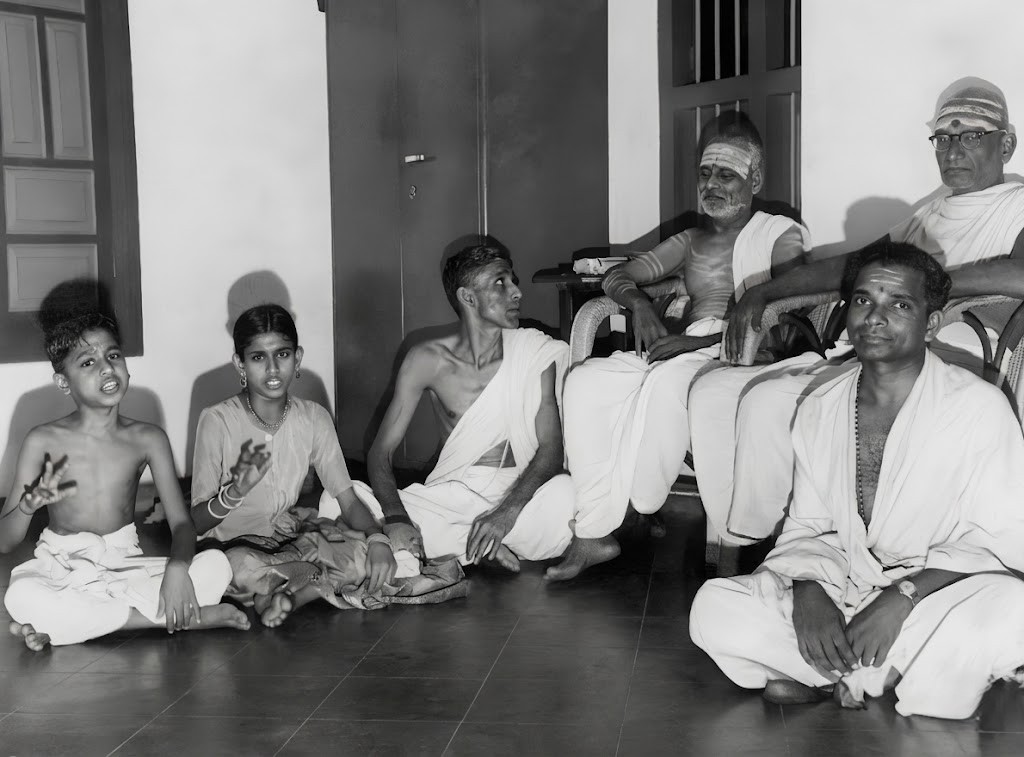
1956, With Sri Adiseshayya
Krishnan is a celebrated exponent of Nama Sankeertanam & Hari-Katha, two of the hoary musical and spiritual traditions of Bharat, which have been handed down to eminent disciples by great saints over the last ten centuries to the present-day purveyors of these exalted traditions.
Hailing from a family of Bhagavatas, Krishnan has performed these ancient and divine forms of musical presentation for over six decades in hundreds of venues in four continents. His Gurus in this tradition included his father Brahmasri KSR, Brahmasri Nathamuni Narayana Iyengar (Nãṇãji), Bhagavata-Sirómaṇi Narayana Sastri (abhanga-siromani), and HH Swami-Haridoss-Giri (popularly known as Guruji), a legendary name in this tradition with whom Krishnan had performed numerous Sankeertanams and “divya-dampatî-vivãham(s)” since 1959. Krishnan’s performance with Guruji in 1990 in the US can be seen in the YouTube.
A Disciple of Kanchi Paramacharya
A disciple of His Holiness Maha-Periavã, Krishnan continued training in the Vedas and scriptures in Sanskrit College, Madras, as part of a program conducted under the auspices of Kanchi Paramãchãrya. Krishnan wrote a book (in Tamil) on Maha-Periavã and more information on this book can be seen elsewhere in this write up.
“Sitãyãscaritam Mahat” (aka Triveni Ramayan)
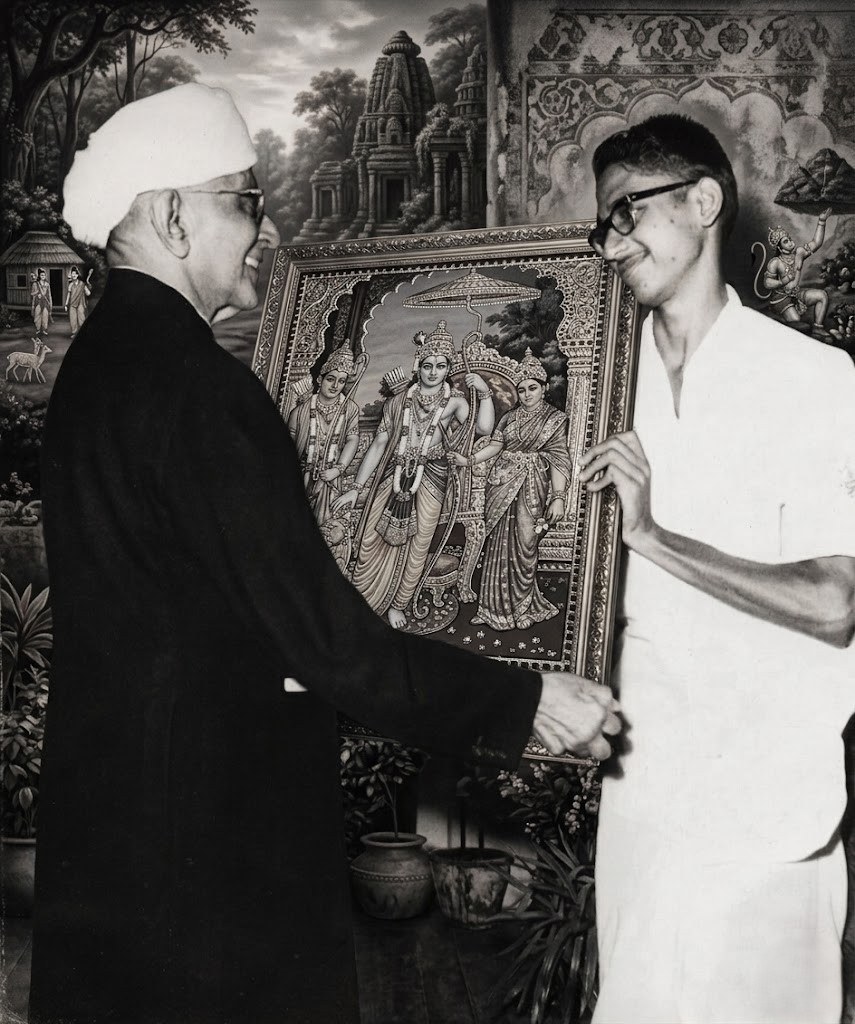
1965, Sir CPR Iyer, Triveni Ramayanam
Krishnan’s earliest Opera (debuted in 1966) — a musical — in three languages, with poems/passages compiled from Sri Valmiki Ramayanam, Kampan’s Rãmãvatãram, and Goswami Tulsi’s Ram Carit Manas — titled “Sitãyãscaritam Mahat”, was set to musical score by Sangeeta Kalanidhi Mudikoṇḍãn Veṇkaṭarãma Iyer and Padma Bhushan Musiri Subrahmanya Iyer and choreographed by Padma Bhushan Dr. V. Raghavan. The Opera, blessed by Kanchi Paramãchãrya, debuted in 1965 and was acclaimed widely and honored by Sir C.P. Ramaswamy Iyer.
Fifty years later, in late 2016, the opera was revived by Smt. Priya Krishnan Parameswaran and Dr. Parameswaran Gopi, completely reset to English dialogues to communicate with western theatrical audience, staged at the Lohman Theatre, in San Francisco, California, and supported by the Asian Art Museum of San Francisco. The neo-production of the Opera retold the Epic of Ramayana through the lens of Sita, the Epitome of Virtue, juxtaposed to other characters including the bewildered Kaikeyi, the wretched Manthara, the vile Sûrpanakhã, and the sagacious Trijaṭã, many of the principal characters of the Epic, Srimad Ramayana. Krishnan’s daughter Priya Krishnan Parameswaran was the music director and co-producer with Dr. Parameswaran Gopi.
Theater, Compositions, Recordings & Ongoing Spiritual Work
A thespian since his collegiate years, Krishnan was invited to the prestigious National Festivals in Ujjain to play leading roles in many of Mahakavi Kalidasa’s famed literary works. He has acted and directed plays in Indian languages, and his theatrical expositions have won acclaim in the Indian news media and awards from the internationally acclaimed Educational Trust, Bharatiya Vidya Bhavan. Krishnan also wrote, and composed to music, yet another musical/opera, “Saranam Aiyappa” on the Lord of Sabarimala with his own lyrics in five Indian languages.
His performances for over 50 years in various continents have been primarily on divine subjects and rare compositions, including Abhang-Sankeertan, Srimad Ramayanam, Srimad Bhagavatam, Nãlãyira-Divya-Prabhandam, Tiruppavai and Gódã-Prabhãvam, Saint Tyagaraja’s Rãmãyanam, Krishna Leela Tarangini, Tulsi-Ramayan (Ram Charit Manas), Bhadrãchala Ramadasa, Gopalakrishna Bharati — just to name a few. Krishnan has to his credit numerous music compositions in several languages including Sanskrit, Telugu, Tamil, Kannada, and Hindi. His music performances on the Musical Saints of India series (1990–2016) were popular, and Krishnan has performed globally for numerous fundraisers for Hindu temples, charitable causes, and divine missions.
He has hundreds of live audio/video recordings available free online (through this website) and across two dedicated YouTube channels, GuruBhakti and Ragasri. Sri S. Lakshminarasimhan co-contributes and manages (from India) the Ragasri channel, which was named in tribute to their father’s compositional signature. Among the most significant bodies of work on these two channels are (1) the complete Krishna Leela Tarangini (84 episodes) in Hari-Katha style and (2) the Sriman Nãrãyaṇeeyam series, a musical rendition of all the Dasakams of Mēlputtūr Narayana Bhattathiri’s 1034-verse devotional poem which summarizes Srimad Bhagavatam. Every one of these hourly episodes — Tarangini or Nãrãyaṇeeyam — is a scholarly production and visual treat in HD-4K digital format. These YouTube channels are consciously kept as non-monetized channels — to help promote Bhakti, Sanatana Dharma concepts and Hindu scriptures devoid of material motivations and compromises.
Recognition
Krishnan was awarded the title of ‘Sangeeta Acharya’ in 2008 by the Indian Fine Arts Academy (“IFAA”), United States of America, and was recognized again, in 2017, this time with the Lifetime Achievement Award, for his musical, artistic and musical contributions to Indian Music over 60 years. He has been the patron Chief Guest, at IFAA’s annual and North American Youth festivals, since inception (2008), and has contributed more than two dozen scholarly articles on various topics to IFAA’s festival souvenirs, a sustained intellectual contribution on various topics. These souvenirs are shared with scores of US and International libraries and Universities as educational material for their Indology students pursuing world music and Arts.
Radha Krishnan (aka Annapurna Krishnan)
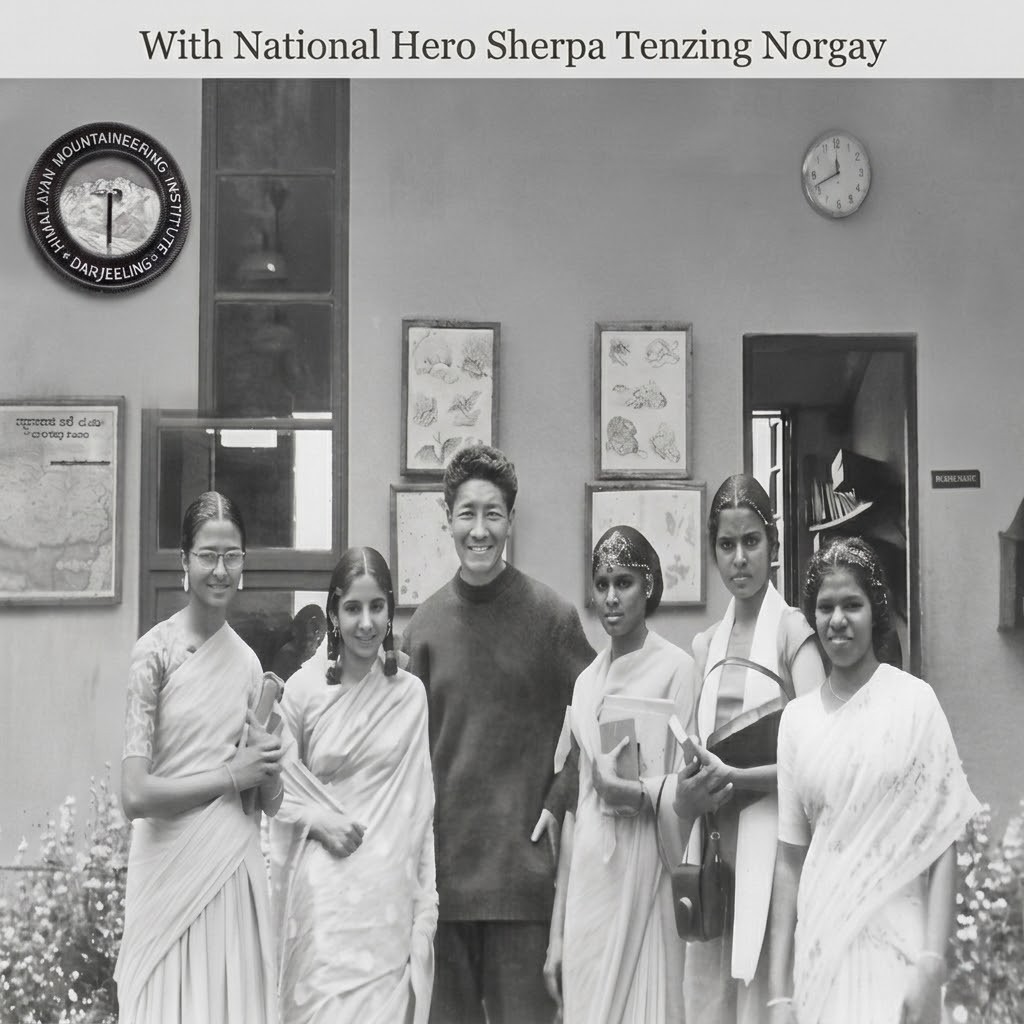
1965, with Sherpa Tenzing Norgay — Himalayan Mountaineering Institute, Darjeeling
In 1965, at a time when women mountaineers in India were exceptions if not rare, Annapurna (who was then a non-commissioned officer in NCC) climbed one of the peaks of the Himalayas under special training from Sherpa Tenzing Norgay, the record-holding pioneer who had conquered the summit of Mt. Everest just thirteen years earlier with Sir. Edmund Hillary. Annapurna was awarded the prestigious Silver Axe, by the Chief of Army Staff (COAS) Padma Vibhushan General J.N. Chaudhuri, OBE, in early 1966 for her feat as a pioneering woman mountaineer.
Radha, an economist and retired banker from the Reserve Bank of India, also formally graduated in Karnataka sangîtam from Central college of Carnatic Music, Madras, India. She learned then under the stalwarts Chittoor Subramanyam Pillai and Veena Vidwãn (Thanjãvur) Lakshmanan.
Krishnan and Radha, with their daughters (the Krishnan Sisters, the celebrated musicians), are involved in several philanthropic activities. Krishnan’s music performances have been fundraisers for charities and philanthropy, and their recordings supplement the Krishnans’ support to various charities, homes for the mentally and physically challenged, and hospitals for the underprivileged.
Disciples and Music Families
Krishnan has been teaching Karnataka Sangîtam for more than 60 years in four continents and has scores of disciples in India, France, England, and in the United States, where he settled with his family in the 1980s.
Many of his disciples in California (for Karnátaka sangîtam, Sampradaya Sankeertanam, and spiritual followership) are accomplished musicians, institutional organizers and spiritual propagators in addition to being great achievers in their chosen fields of profession. To mention a few: (Chinmaya) Acharya Sri Mahadevan-ji, Srimati Rukmini Raghunathan, MD., Professor R. Jayakrishnan (UCI), Sri Hari Asuri, Sri Parameswaran Gopi, Sri Kodumudi S. Radhakrishnan, Sri Shekar Viswanathan, Professor K R Subramanyam (USC), Sri Radhakrishnan Ramachandran and Sri Narayanan Srinivasan. Scores of classical musicians and music teachers from California and overseas — such as Pt. Vivek Datar, Pt. Ravi Gutala, Sankara Subramaniyam, Nani Srinivasan Narayanan, G Srinivasan, Arjun Narayanan — have all been accompanying Krishnan for more than 25 years, as musicians in their own right and as disciples and part of Krishnan family.
Krishnan’s daughters/disciples, Priya Krishnan Parameswaran, Harini Krishnan Vikas, and Subhapriya Krishnan Srivatsan, are acclaimed Carnatic musicians settled in the San Francisco Bay Area. Known as the ‘Krishnan Sisters’ in Europe and the United States, and the ‘California Sisters’ in India, the three began performing very young in AIR and Doordarshan, also touring internationally very young, releasing their first classical music album in 1982. The sisters had their initial training from their mother, Radha Krishnan, and were also trained under the eminent musicologist Dr. S. Ramanathan in the 1980s.
Priya has been a writer, co-producer and co-director of several musicals, theatrical productions primarily from Valmiki Ramayana, Ram Charit Manas, Abhang-Sants and Varkari traditions and Devi Bhagavatam. Her Soundarya Lahari musicals and spiritual recitational teaching over the YouTube have earned a lot of fans and devotees. She is also a Vainik and teaches vocal and instrumental classical music to select few and runs a Samskriti group known as Siksha.
Harini has been very active in the US political arena for more than a decade. She is the Nationally Acclaimed Democratic Community Organizer Mobilizing South Asian & AAPI, holding very high offices in DNC, such as chair or co-chair of SAFA and AAPI. Her prime goal is to organize and motivate the citizens-at-large to bring about a positive change in Governance and public attitudes to help resurrect morality in Governance, and respect and leadership of the US in global arena. She is also active in the Indian music scene, invited by Universities and State-wide Art organizations for judging in music and Arts competitions.
Subhapriya is a renowned Indian Carnatic classical vocalist, guru, and musicologist. A versatile artist for over 30 years, she performs both in Karnataka Sangîtam and Hindustani Bhakti Sangîtam. Subhapriya has been a founder member and principal coordinator of SVLOTUS for over 25 years and conducts regular workshops on classical music and spirituality and on Vishishtãdvaita concepts and scriptures. She collaborates as a music educator, curator of concerts and music festivals — along with her husband, Vidwãn Hemmige V. Srivatsan, a well-known violinist and vocalist (and disciple of Sangita Kalanidhi, Palghat Sri K V Narayanaswamy). Subhapriya is a mentor to the current generation of organic youth, teaching Karnataka Sangîtam and scriptural knowledge, and leading the spiritual organization SGM (Sadãcãra Gnyãna Maṇḍali).
While the sisters are highly academically qualified and well-known in their own chosen profession and pursuits, music has been their mainstay and hallmark. Their hoary music tradition now extends to the fourth generation through their children, all of whom are vocal and instrumental musicians, well-versed in Indian and other systems of global music with proficiency and acclaim.
Krishnan Siblings
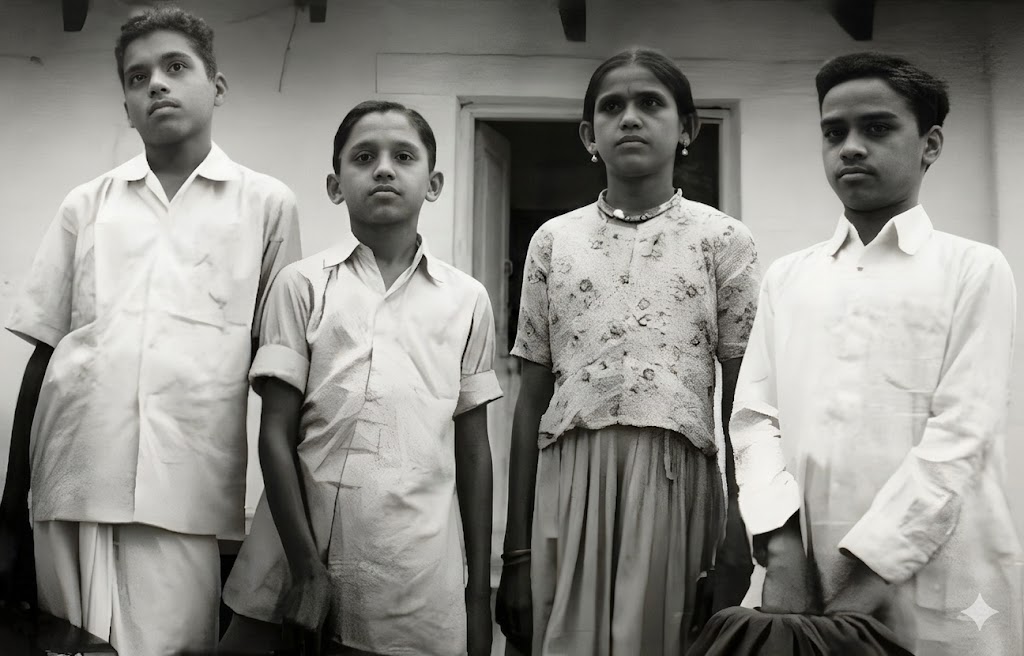
With VVS and Vikku, 1956
Krishnan’s sisters, Smt. Ramamani Ranganathan, Smt. Bhooma-Narayanan and brothers, Sri S. Lakshminarasimhan (aka Ragasri ‘Narasimhan’) and ‘Yogãchãryã’ Sri S. Sridharan, continue the family’s Sankeertanam tradition in Chennai, India. Smt. Ramamani Ranganathan continues to train devotees in the Stotra recitation tradition in Hyderabad; Smt. Bhooma-Narayanan, Sri Sridharan and Sri Narasimhan, based in Chennai, carry forward the holy Nama-Sankeertana tradition originally led by Guru, Pûjya Śri Nathamuni Narayana Iyengar, a tradition now sustained for about 75 years. The sisters are retired public servants, and the brothers are retired bankers.
Ragasri Narasimhan is a vocalist and equally proficient in Harmonium and electronic Keyboard; he is the principal singer and curator of many of RagaSri’s compositions, digitally preserving in the Ragasri Channel for more than a decade. Sri S. Sridharan is an internationally acclaimed Yoga-Acharya and vice president of the Indian Yoga Association.
Beyond Music
1978 — With columnist Art Buchwald and President Jimmy Carter, The Oval Office
Krishnan, a gold medalist, from University of Madras, one of three oldest & renowned Universities of India, had the distinction of becoming one of the youngest Fellows of the Royal Chartered Institute of Bankers (London), an Incorporated Certified Accountant, UK (ICA) and a Fellow of the Institute of Financial Accountants (London), when he was in his early thirties. Krishnan was one of the top rankers (Banking Law) in global ranking, published in The Times before his elevation to the highest Royal Fellowship in 1981.
Krishnan has been a banker since 1965, initially with Reserve Bank of India and then with State Bank of India. He then held senior executive positions in international banks in Europe, Great Britain, and the United States. He has widely traveled the globe since 1978.
He was one of the two co-founder-principals of two reputed US Fiduciary and Consulting corporations, which served for more than thirty years as court-appointed fiduciaries at the nomination of several US Federal and State agencies, Governmental regulators, and Banks: also, as banking advisor to select regulators of foreign governments. Krishnan retired in 2023 as CEO and Chairmen of those firms. Krishnan also served, until 2023, as the Special Deputy Commissioner of the California Department of Financial Protection and Innovation.
The Written Word
Beyond the long Banking and Fiduciary Career, Music, and Spiritual pursuits, Krishnan has been a prolific writer since he was 20 years of age. As a young aspirant, he contributed first as a journalist and then became a short story writer and later a spiritual writer. Many of his short stories got published in weeklies and popular monthly Indian magazines. Finally, many of his operatic and scholarly articles — exploring the lives of musical saints, the philosophical traditions of Bhakti, and the history and current attitudes in Indian Music — have been published for decades, forming a body of work that spans varied subjects from Saint Tyagaraja and Narayana Teertha to Ramayana and Mahabharata and the legacy of Mahatma Gandhi, to mention a few. Some of them can be found in this website under the section titled Articles.
His spiritual book (published in 2024 by the acclaimed GIRI Publishers, India) is a mini-memoir (1955–1965) on his direct personal interactions with HH Paramacharya Chandrasekharendra Saraswati — titled ‘Periavã KãlaDiyilirundu’ (in Tamil). Krishnan’s latest book, “In the Footsteps of Periavã”, is in English and was released by HH Vijayendra Saraswati Swamigal on 21st August 2026. His other spiritual books, collections of stories, and Corporate and Personal Memoirs are slated for release in 2027, God willing.
Sat-Sangam Discourses (2020–2026)
For more than six years, Krishnan has been giving weekly musical discourses (Hari Katha) — divine lectures/pravacanam — through online streaming sessions. Scores of families from India and the US regularly dial in and all those live sessions are posted (after the live-streaming) to one of the two YouTube channels dedicated for this purpose (GuruBhakti and Ragasri).
धर्मो रक्षति रक्षितः — “Dharma protects those who protect it.”
Key Dates
- 1955 — Meets HH Chandrasekharendra Saraswati and debuts as a musician
- 1959 — Begins performing Sankeertanam with Swami Haridoss Giri (Guruji)
- 1965 — Begins banking career with Reserve Bank of India
- 1965–1966 — Sitãyãscaritam Mahat debuts
- 1968 — Career with State Bank of India begins
- 1978 — Visits the USA under distinguished fellowships
- 1981 — Krishnan Sisters release first classical music album
- 1982 — Family relocates to Europe
- 1987 — Family relocates to the United States
- 1988–2016 — Musical Saints of India performance series
- 2008 — Awarded ‘Sangeeta Acharya’
- 2017 — ‘Lifetime Achievement’ Award in the field of Indian Music
- 2020–present — Weekly Sat-Sangam discourses via online streaming, globally
- 2023 — Retires as CEO/Chairman; also concludes service as Special Deputy Commissioner, California DFPI
- 2024 — Periavã KãlaDiyilirundu (Tamil book) published by GIRI Publishers, India
- 2026 — In the Footsteps of Periavã (English book) published by GIRI, India